
By Bashir Hassan
In a bold step towards improving education outcomes for girls in Bauchi State, Connected Development (CODE), with support from Malala Fund, has unveiled groundbreaking findings on the challenges facing the sector and introduced citizen-driven tools to enhance transparency and accountability.
The dissemination meeting, held in Bauchi, drew the participation of government officials, civil society, community leaders, and education stakeholders. The event provided a platform to share research insights, highlight pressing gaps, and set a roadmap for action.
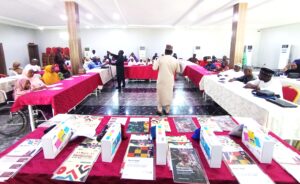
Hamzat Lawal, Chief Executive of CODE and Founder of the Follow the Money Initiative, in a press briefing shortly after the meeting, explained that their research revealed critical governance challenges, including poor resource allocation, weak monitoring of projects, and inadequate gender responsiveness in education planning.
“The findings highlight the urgent need for gender-responsive planning, stronger citizen participation, and open mechanisms for tracking education funds,” Lawal said.
He said that to address these challenges, CODE introduced the NomTrac Citizen Oversight Tool—a real-time, user-friendly platform that empowers citizens to track education spending, monitor school projects, and provide feedback directly to policymakers.
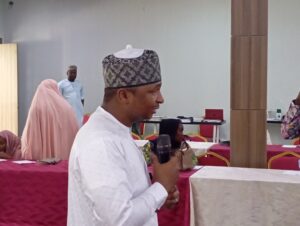
According to Hamzat, the platform has already proven effective in Kaduna, where 52 stalled projects were tracked and completed, and is now being adapted for Bauchi State.
“At the grassroots level, CODE launched 24 School Monitoring Teams across four local government areas. These teams—made up of school administrators, parents, community leaders, girls, and local organizations—are trained to advocate for gender-sensitive improvements, monitor service delivery, and ensure accountability.
“Alongside the launch of NomTrac, CODE also presented its Baseline Survey Report on Transparency and Accountability in Bauchi State Education. The report not only diagnoses existing gaps but also provides practical recommendations to strengthen collaboration between government and communities”, said Lawal.
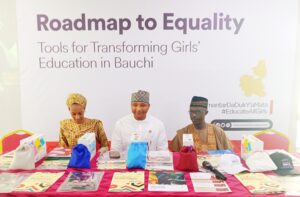
Bauchi State Commissioner for Education, Dr. Muhammad Lawan Rimin Zayan, commended the initiative, describing it as a timely intervention that aligns with the state government’s commitment to advancing girl-child education—a priority of Governor Bala Mohammed’s administration.
He said that, “with these new tools and strategies, CODE and Malala Fund are fostering a future where every girl in Bauchi State has the opportunity to access quality education, thrive, and contribute to society”.