
By Danhassan Abubakar
Connected Development (CODE), backed by the Malala Fund, has reaffirmed its commitment to boosting girls’ education in Bauchi State through sustained mentorship, leadership, and entrepreneurship programs.
Speaking at a capacity-building training and curriculum unveiling in Bauchi, CODE’s Acting Chief Executive Officer, Hyeladzira James Mshelia, celebrated the Girl-Child Education Project’s (GEP) growing impact.
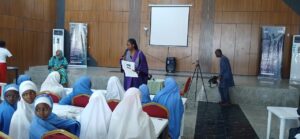
She revealed that the mentorship structure has scaled dramatically from four girls per mentor to roughly 40 girls across four local government areas, significantly improving confidence and retention rates.
To ensure the sustainability of these interventions, the Bauchi State government is moving to formally integrate the project into its fiscal planning. Hajiya Aisha Adamu Hussaini, Deputy Director of Budget, announced that the Ministry of Budget, Planning, and Multilateral Coordination is collaborating with the Ministry of Education to capture CODE’s contributions as capital receipts in the state budget. This move aims to institutionalize foreign development aid and streamline future government educational planning.
The initiative also emphasizes a safe learning environment, drawing critical support from law enforcement. Aliyu Abba Kalli, the Bauchi State Commander of the National Agency for the Prohibition of Trafficking in Persons (NAPTIP), underscored the agency’s strict mandate to shield women and children from trafficking, harassment, and gender-based violence. Kalli urged communities to utilize NAPTIP’s official hotlines to report abuses, ensuring the girls remain protected both in and out of the classroom.
The unveiling of the project’s second-year curriculum marks a pivotal milestone in CODE’s holistic approach to female empowerment in the region.
Beyond simply returning girls to school, the initiative focuses on keeping them enrolled, guiding their transition to higher education, and arming them with self-reliant entrepreneurial skills. Organizers note that the updated curriculum will further solidify these gains, preparing young girls across the state to navigate real-world challenges and become productive societal leaders.