
By Bashir Hassan Abubakar
For four days last week, Bauchi State became the focal point of high-level development diplomacy as officials from Global Affairs Canada (GAC) and UNICEF Nigeria undertook a comprehensive monitoring and partnership visit to the state. Beyond the ceremonial exchanges and courtesy calls, the visit served as a practical evaluation of years of donor-supported interventions — and a forward-looking discussion on what sustainable development should look like in a subnational context.
Led by Mr. Arash Irantalab Tehrani, Head of Development Cooperation at the High Commission of Canada in Nigeria, alongside UNICEF Nigeria’s Deputy Country Representative, Mrs. Rownak Khan, the delegation’s mission was clear: assess impact, strengthen accountability, and deepen collaboration with Bauchi State Government and implementing partners.
What emerged from the visit was a narrative of partnership — one built on shared priorities, measurable outcomes and an increasing emphasis on sustainability.
Setting the Tone: Policy-Level Engagement
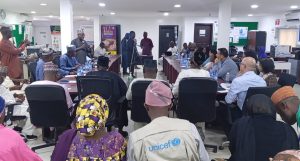
The visit commenced with strategic meetings involving commissioners and chief executives from key Ministries, Departments and Agencies spanning health, education, humanitarian affairs and other social service sectors. The choice to begin at policy level was deliberate. Sustainable development is not only about community interventions; it is about institutional capacity, budgetary commitments and political will.
The Bauchi State Commissioners for Health and Education, Dr. Sani Mohammed Dambam and Dr. Lawal Mohammed Rimin Zayam, welcomed the delegation by outlining the state’s reform agenda under Governor Bala Mohammed. They emphasized that the state has created an enabling environment for donor-funded programmes — one that allows external support to translate into tangible outcomes.
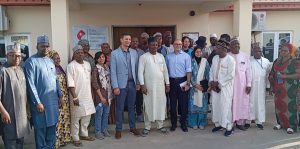
Across sectors, the interventions supported by GAC funding and implemented in collaboration with UNICEF and other partners cut across maternal and child health, girls’ education, nutrition, sexual and reproductive health rights (SRHR), menstrual hygiene management, water, sanitation and hygiene (WASH), village savings and loan associations, and adolescent-led advocacy against gender-based violence.
For Bauchi — a state historically grappling with maternal mortality, out-of-school children, malnutrition and gender inequality — these areas are not abstract development buzzwords; they are urgent priorities.
From Government House to Grassroots
While policy discussions framed the visit, it was in the rural communities of Dass and Darazo that the true story unfolded.
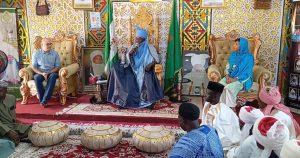
In Dass Local Government Area, the delegation first paid homage to the Emir, His Royal Highness Alhaji Othman Bilyaminu Usman. The visit to the palace was more than protocol; it reinforced a key principle of development sustainability — community ownership. Traditional institutions in northern Nigeria wield enormous influence, and securing their buy-in often determines whether programmes endure beyond funding cycles.
In Bundot community, the delegation engaged adolescent girls’ groups supported by Plan International. These girls are not passive beneficiaries. They are trained champions advocating against gender-based violence within their households and communities. Alongside them are mixed groups of adolescent boys and girls promoting awareness on sexual and reproductive health rights.
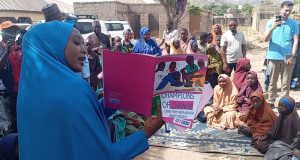
The symbolism was powerful: young people speaking confidently about rights, dignity and equality in settings where such conversations were once taboo.
Women as Drivers of Change
At Dot community in Dass LGA, the delegation met members of the “Mama2Mama” initiative — women-led community resource groups established by the local government with technical support from UNICEF and funding from GAC.
These women operate at the intersection of health advocacy and economic empowerment. They mobilize households for antenatal care attendance, immunization uptake, facility delivery, gender-based violence mitigation, and improved hygiene practices. Yet their impact extends beyond awareness campaigns.
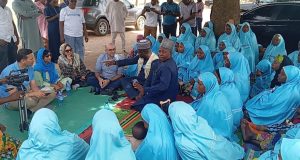
Members demonstrated how they were trained to produce reusable sanitary pads — a simple but transformative skill. The initiative addresses menstrual hygiene management, reduces stigma, and generates income for participants. In communities where economic opportunities for women are limited, such interventions create a ripple effect: improved health practices, increased financial autonomy and enhanced social status.
This dual-impact model — combining health outcomes with livelihood support — reflects an evolution in development thinking. It recognizes that poverty, gender inequality and poor health are interconnected challenges requiring integrated solutions.
Engaging Men and Redefining Norms
In Konkyel community of Darazo LGA, the delegation met another critical constituency: male caregivers under the “Fathers4Health” initiative.
Established by the Bauchi State Primary Health Care Development Board in partnership with UNICEF and supported by GAC, Fathers4Health challenges entrenched gender norms by positioning men as advocates for maternal and child health. Members promote immunization, hygiene practices and healthcare access within their communities.
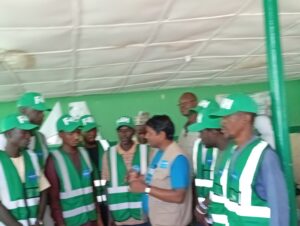
In societies where men often control household decisions and financial resources, their engagement can significantly influence health-seeking behaviour. The initiative acknowledges that achieving gender equality does not mean excluding men — it requires transforming attitudes across the board.
The inclusion of male champions alongside adolescent advocates and women’s groups signals a comprehensive strategy aimed at social norm change rather than isolated service delivery.
Linking Agriculture, Nutrition and Economic Resilience
The delegation’s itinerary also included a visit to a technology incubation centre in Bauchi metropolis, where women and youth entrepreneurs are benefiting from value-chain interventions supported by GAC and implemented with MEDA.
The project focuses on three main agricultural value chains — rice, peanut and soybean — enhancing processing capacity, market access and business skills. In a state where agriculture is the backbone of rural livelihoods, improving productivity and value addition directly impacts household incomes and food security.
Nutrition outcomes, particularly among women and children, are closely tied to economic resilience. By strengthening agribusiness and supporting small-scale enterprises, the intervention addresses the structural drivers of malnutrition and poverty.
This integrated approach aligns with Canada’s broader development priorities: inclusive growth, gender equality and climate resilience.
A High-Level Reaffirmation
The climax of the visit was a courtesy call at the Government House. There, Mr. Arash Irantalab Tehrani reaffirmed Canada’s commitment to advancing inclusive development through strong collaboration with government, multilateral institutions and civil society.
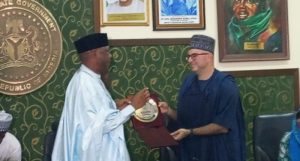
He announced six new projects for Nigeria totaling $64 million, with four directly targeting Bauchi State. The allocation signals confidence in Bauchi’s governance environment and the effectiveness of ongoing collaborations.
Mr. Irantalab emphasized that empowering women and girls remains one of the most efficient investments any society can make. He also acknowledged the growing impact of climate change on agriculture, livelihoods and food security — noting that Canada will continue supporting climate-smart and resilience-building initiatives, particularly for youth and women.
Responding on behalf of Governor Bala Mohammed, Deputy Governor Mohammed Auwal Jatau highlighted longstanding collaborations under programmes such as Nigeria WAY, LINE and the Bauchi Opportunities for Responsive Neonatal and Maternal Health (BORN) project.
These initiatives have supported over 16,000 women and youth-led businesses, improved agricultural productivity for thousands of rural households, strengthened Village Savings and Loan Associations, and enhanced maternal and neonatal healthcare systems.
Governor Bala Mohammed reiterated his administration’s commitment to allocating at least 15 percent of the state budget to health in line with the Abuja Declaration and fulfilling counterpart funding obligations under primary healthcare agreements.
Such fiscal commitments are critical. Donor funding can catalyze progress, but sustainable systems require domestic investment.
Why the Visit Matters
Development visits often risk being reduced to photo opportunities. However, the GAC–UNICEF engagement in Bauchi reflected something deeper — a model of development cooperation grounded in accountability and measurable impact.
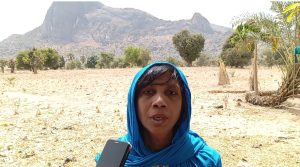
By moving from government boardrooms to rural villages, from palaces to incubation centres, the delegation assessed the entire ecosystem of intervention: policy frameworks, community ownership, gender dynamics, economic sustainability and institutional commitments.
For Bauchi State, the visit represents validation — a recognition that the enabling environment and political will necessary for effective partnership are in place.
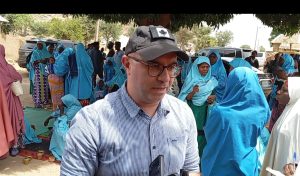
For Canada and UNICEF, it provides reassurance that investments are yielding results and that local institutions are positioned to sustain gains.
Looking Ahead
As Bauchi continues to grapple with complex development challenges, partnerships of this nature offer both resources and strategic direction. Yet the ultimate test will lie not in announcements or funding figures, but in outcomes: reduced maternal mortality, improved school attendance, strengthened livelihoods, and resilient communities capable of sustaining progress beyond project timelines.
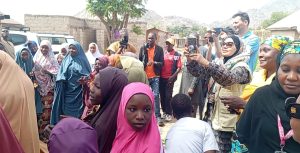
The GAC and UNICEF visit may have lasted four days, but its implications extend far beyond. It underscores a central lesson in development practice — that transformation occurs when global commitment meets local ownership.
In Bauchi State, that intersection appears to be taking shape.