
By Lizzy Carr
As Bauchi commemorates the 2025 World Population Day, the State Government has reaffirmed its commitment to empowering young people as key players in achieving the demographic dividend of the state.
Speaking at the commemoration day at the Banquet Hall of Government House, the State Commissioner for Budget, Economic Planning and Multilateral Coordination, Amina Mohammed Katagum, said the state recognizes the strategic importance of young people in shaping inclusive development across all sectors.

The commissioner, who was represented by the Special Adviser to the Governor on Multilateral Coordination and Integration, Abubakar Abdulhameed Bununu, said the state has ensured that young people are actively involved in policy development, political participation, ending unmet needs for family planning, preventing maternal deaths, and eliminating gender-based violence.
She said the 2025 World Population Day theme, “Empowering Young People to Create the Families They Want in a Fair and Hopeful World,” calls for a collective effort from governments, the private sector, and development partners to ensure that young people have the agency and support to build the lives and families they envision.
Highlighting interventions in the state, Katagum revealed that Bauchi has established youth centres and is working with UNFPA to develop a state youth policy. She added that while progress has been made, a multi-sectoral approach is still needed to reach the most marginalized and vulnerable groups.
Also speaking at the event, the Executive Director of the United Nations Population Fund (UNFPA), Dr. Natalia Kanem, emphasized that economic, health, and social barriers are preventing many young people from achieving their desired family size.
Represented by UNFPA Gender/Reproductive Health Analyst and State Programme Officer, Deborah Tabara, Dr. Kanem cited findings from the 2025 State of World Population report titled “The Real Fertility Crisis,” which found that one in five people under the age of 50 globally expect to have fewer children than they want due to financial hardship, health concerns, and limited reproductive agency.
“The real fertility crisis is not about declining numbers, but about lack of choice,” she said. “Misguided assumptions and policy responses blaming young people for low fertility rates only worsen the challenges they face.”
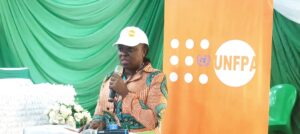
Dr. Kanem advocated for inclusive policies such as secured jobs, adequate housing, affordable childcare, and access to reproductive health services to enable young people make empowered choices.
She stressed the need to remove societal and systemic barriers and urged stakeholders to “listen to what young people want and need.”
The ED reiterated UNFPA’s commitment to supporting Bauchi State Government in leveraging its youthful population through inclusive strategies, planning and budgeting processes.
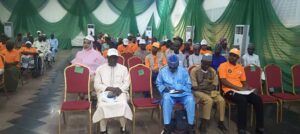
Federal commissioner National population commission Bauchi Alh Mohammed Ibrahim Darazo represented by the State Director Mohammed Isah noted that the youthful and vibrant population has the potential to be a powerful drivers of national development, however, to harness this promise, the nation must address the structural barriers that limit their ability to make informed and voluntary decisions about their lives, livelihoods, and reproductive choices.
“Far too many of our young people face multiple constraints ranging from limited access to quality education and healthcare, to unemployment, gender-based discrimination, and social marginalization. These realities threaten to turn our potential demographic dividend into a demographic burden if left unaddressed”.
He further stated that empowering the youth is not a choice, it is an existential imperative that demands collective resolve, evidence-based action, and a steadfast commitment to justice and opportunity and youth investments.
“Let us work together to create a Nigeria where every young person has the tools, the freedom, and the support to create the life and the family they desire, let us make this year’s World Population Day a defining moment for a more inclusive, equitable, and data-informed Future.
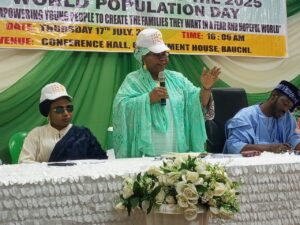
Also speaking, Bauchi State Commissioner for Higher Education, Dr. Lydia Haruna Tsammani, said empowerment must go beyond starter packs, noting that education is the most sustainable form of empowerment.
“We have reviewed school curricula to integrate skills acquisition from primary through tertiary levels and established a College of Education (Technical) to train specialized teachers,” she said.
The event featured a panel discussion where young people and persons with disabilities shared their experiences and perspectives on the year’s theme, calling for increased inclusivity and access to opportunities.