
By Lizzy Carr
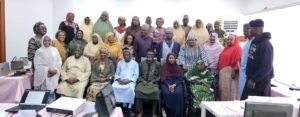
The Executive Chairman of the Bauchi State Primary Healthcare Development Board, Dr. Rilwanu Mohammed, has expressed concern that misleading religious teachings by some clerics are undermining efforts to improve family planning uptake in the state.
He made the remarks on Monday while declaring open a four-day training on Human Rights-Based Approach to Family Planning in Bauchi organized by the United Nations Population Fund (UNFPA) in collaboration with the Bauchi State Ministry of Health and Social Welfare and the State Primary Healthcare Development Board.
Dr. Rilwanu Mohammed said some Muslim and Christian religious leaders who are not well grounded in the scriptures preach against family planning and child spacing, insisting that people should continue bearing children without considering the health and economic implications.

He said such teachings have negatively affected the implementation of family planning programmes supported by development partners, particularly UNFPA.
Despite the challenges, he commended UNFPA for its sustained support to the Bauchi State Government, especially in the procurement of family planning commodities, renovation and equipping of health facilities, and capacity building for health workers.
“We signed a Memorandum of Understanding with UNFPA for the procurement of family planning commodities because they guarantee genuine, quality products. Beyond commodities, they have continued to support us through training, facility renovation and technical assistance,” he said.
The Chairman disclosed that the state government approved N70 million for the procurement of family planning commodities in the 2026 budget, an increase from N50 million approved last year.
He explained that previous procurement took between nine and ten months due to administrative processes but expressed optimism that future procurements would be faster because the necessary procedures have already been established.
He further praised UNFPA for recently carrying out a 72-hour makeover of six primary healthcare facilities in the state, describing the intervention as impactful.
“What makes us happier is that this is grant support, not a loan or World Bank project that future generations will have to repay,” he said.
He stressed that while the state has recorded progress in family planning, greater attention must be given to implementing existing laws, including the Child Rights Act, rather than merely approving them.
Dr. Mohammed lamented the weak enforcement of laws designed to protect children and promote public welfare, noting that child sexual abuse remains a major concern.
He urged participants at the training to actively contribute during the sessions and develop practical recommendations that would strengthen family planning programmes and improve service delivery across Bauchi State.
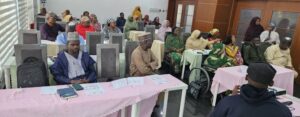
Earlier, the UNFPA Desk Officer at the Bauchi State Ministry of Health and Social Welfare and Secretary of the State Technical Working Group on Family Planning explained that the training would equip participants with knowledge of the Human Rights-Based Approach and Gender Transformative Approach to family planning, enabling them to identify gaps in existing programmes, understand the country’s human rights obligations, and develop action plans to strengthen gender equality and rights-based family planning services in Bauchi State.