
By Lizzy Carr
The Executive Secretary of the Bauchi State Agency for Persons with Disabilities, Briska Jerome, has called on the State House of Assembly to expedite the passage of the Commission for Persons With Disabilities (PWDs) Bill.
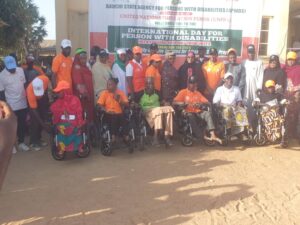
Speaking at the commemoration of the 2025 International Day of Persons with Disabilities held at the Agency’s premises, she said the establishment of the Commission is essential to create a strong legal and institutional foundation for disability-inclusive development in the state.
“The establishment of the Commission will ensure sustainable implementation of programmes, protection of rights and equitable access to opportunities for all PWDs in Bauchi,” she noted.
Jerome added that the annual commemoration is not just a celebration but a call to action, reminding stakeholders of their shared responsibility to build an inclusive society where everyone can thrive, contribute meaningfully, and live with dignity.
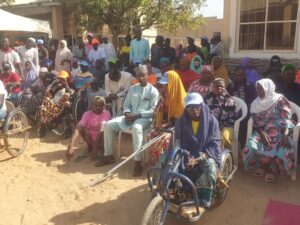
“We also held a road show and public sensitization campaign to engage communities, increase awareness, and promote understanding of disability inclusion, accessibility and the rights of PWDs,” she said.
She commended UNFPA, the Bauchi State First Lady, and other partners for their continuous support.
In a statement delivered on behalf of the UNFPA Executive Director, Ms. Diene Keita, by the Gender and Reproductive Health Analyst and Bauchi State Programme Officer, Deborah Tabara, the agency emphasized that the full inclusion and safety of persons with disabilities is indispensable in creating a more equitable world—free from harm, including in digital spaces.
She noted that globally, one in six people live with a disability. For many, digital technology has become a source of empowerment—expanding social networks, opening avenues for employment and helping them navigate daily tasks.
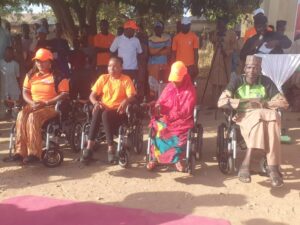
However, she warned that the digital world also poses significant risks, especially for women and girls with disabilities who face intersecting forms of discrimination and are far more likely to experience gender-based violence both physically and online.
“The weaponization of digital tools against PWDs takes many forms, such as attaching tracking devices to mobility aids or sharing medical information without consent. Harmful beliefs and assumptions about people with disabilities often allow perpetrators of digital violence to act with impunity,” she said.
Keita stressed that efforts to protect people with disabilities are sometimes misguided, focusing on restricting access to technology instead of creating conditions for safe use, which can ultimately lead to loss of independence, technology access, and essential social connections.
She added that services to prevent and respond to technology-facilitated violence must be readily accessible to people with disabilities. Safety information should also be provided in multiple accessible formats to enable women and other PWDs to protect themselves without depending on intermediaries.
“As laws and regulations evolve to address new forms of violence, PWDs—especially women and girls—must be at the forefront of shaping guardrails that ensure safety, accessibility and accountability,” she said.
“If we are serious about leaving no one behind, we must recognize the leadership and lived experiences of people with disabilities and work together to confront threats that limit their full participation in society. Realizing rights and choices for all in today’s world depends on the safe use of technology. On this International Day of Persons with Disabilities, let us act with intention, follow the lead of PWDs, and create safe and inclusive online spaces where all people can thrive.”

The Bauchi State First Lady, Hajiya Aisha Bala Mohammed, called on governments, donor partners and individuals to support efforts aimed at empowering persons with disabilities and reducing street begging.
She donated ₦2 million to PWDs under her Al-Muhibba Foundation as part of her commitment to improving their welfare.